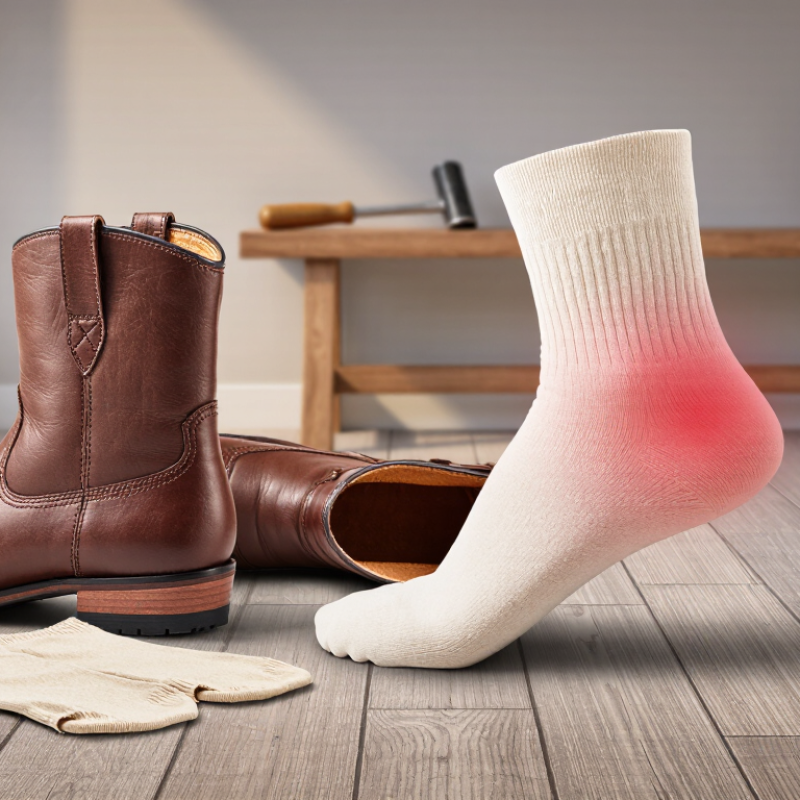
If you have searched “why do my new leather boots hurt my heels,” you are not alone. Many people experience rubbing, pressure, or sharp discomfort during the first few wears. Stiff leather often presses against the heel counter before it softens. A narrow fit, poor heel grip, or rough seam can make the problem worse.
The pain usually appears as redness, hot spots, blisters, or tender skin near the Achilles tendon. I have found that even well-made boots can cause trouble when worn for several hours immediately. Your feet may need time to adjust. The boots may also need gentle breaking in. Small details matter, such as wearing cushioned socks, tightening the laces correctly, and checking whether your heel lifts while walking.
Do not ignore persistent pain. That matters.
A qualified podiatrist or experienced footwear professional can help identify pressure points, gait issues, or sizing problems. Simple changes may help, but not every boot becomes comfortable. Sometimes the shape is simply wrong for your foot. I once assumed stronger leather meant better support, but that belief overlooked fit and flexibility. This guide examines common causes, practical solutions, and signs that your boots should be returned instead of forced into comfort. Expect realistic advice, not a promise that every painful pair can be saved.
Define the Pain: Heel Slip, Friction, Pressure, or Structural Fit
Why Do My New Leather Boots Hurt My Heels?
Define the Pain: Heel Slip, Friction, Pressure, or Structural Fit
Heel pain starts with identifying the exact sensation. If your heel lifts slightly while walking, you may have heel slip. A small amount is normal, but repeated movement rubs the skin and creates a hot, red patch. Friction often feels burning rather than sharp. Check the heel after ten minutes indoors, not after a long walk.
Pressure feels different. A tight collar may press against the Achilles area, while a narrow heel counter can create one painful spot. Thick socks may worsen this problem. Leather can soften with wear, but it rarely changes the boot’s length or basic shape. Do not treat severe pain as a normal break-in stage.
Structural fit involves more than heel size. Your heel pocket, arch position, instep height, and toe space must work together. If your foot slides forward, the boot may be too wide or too deep. If your heel feels trapped but your toes feel cramped, the shape may simply be wrong. Fit boots late in the day, when feet are slightly larger. Walk on clean indoor floors. I sometimes misjudge a boot after a quick try-on, especially with thin socks. That mistake matters. A cushioned insole, heel grip, or lacing adjustment may reduce movement, but these solutions cannot correct a fundamentally unsuitable structure.
Why Do My New Leather Boots Hurt My Heels?
Define the Pain: Heel Slip, Friction, Pressure, or Structural Fit
Use the pattern of symptoms to identify the likely fit problem. Heel slip commonly creates rubbing at the back of the heel, friction may cause redness or blisters, pressure often feels concentrated at the collar or heel counter, and structural fit problems tend to persist even when the boot is securely laced.
The chart shows whether each symptom is typically associated with a fit issue; it is a practical comparison guide rather than a prevalence survey or medical diagnosis.
Measure Boot Fit: Allow 10–12 mm of Toe Room (APMA Guidance)
New leather boots can hurt your heels when the boot fits tightly in front but slips at the back. Stiff leather may also press against the Achilles area before it softens. The American Podiatric Medical Association reported that 77% of adults had experienced foot pain in its 2014 national survey. Heel discomfort is common, but it should not be ignored.
Measure the fit while standing, wearing the socks you normally use. Leave 10–12 mm between your longest toe and the boot’s front, following APMA fitting guidance. Measure both feet, preferably later in the day. Feet often swell slightly after walking. Your toes should move freely, without touching the leather. Too little room can compress the forefoot and change your stride.
Check the heel next. A small amount of movement is normal in new boots, but your heel should not lift repeatedly with each step. Lace the boot firmly across the instep, then walk on a hard floor for several minutes. I have found that a boot can feel comfortable while sitting and painful after ten minutes of walking. That first impression can be misleading. If rubbing creates blisters, numbness, or sharp pain, stop wearing the boots and seek professional assessment. Break-in time should soften leather, not correct an incorrect size.
Break In Gradually: Add 1–2 Hours of Wear per Session (AAOS)
Why Do My New Leather Boots Hurt My Heels?
New leather boots often hurt because the heel counter is still stiff. Your foot may also slide slightly while walking, creating repeated friction. A tight opening can press against the Achilles tendon. Even a well-made boot can feel harsh during the first few wears. The American Academy of Orthopaedic Surgeons recommends breaking footwear in gradually, adding only 1–2 hours of wear per session. Do not force the process. Pain is useful information.
Tips: Wear the boots indoors first, preferably with the socks you normally use. Check your heels after thirty minutes. Look for redness, warmth, or a developing hot spot. A soft blister pad can reduce rubbing temporarily. Lacing should feel secure, not restrictive. If the boot pinches your toes, loosening the laces may not solve the real problem. The shape may simply be wrong for your foot.
Increase wear time only when your skin feels normal afterward. Try short walks on smooth surfaces before longer outings. I used to assume discomfort meant leather needed more time, but that is not always true. Sharp pain, swelling, numbness, or an open blister deserves a pause. Persistent heel pain may involve tendon irritation or another condition, so consult a qualified healthcare professional. A boot should become familiar gradually, not painful by force.
Why Do My New Leather Boots Hurt My Heels? — Break In Gradually: Add 1–2 Hours of Wear per Session (AAOS)
| Area to Check |
What May Be Happening |
Practical Sign |
Recommended Response |
| Stiff heel counter |
New leather and the rear structure have not yet conformed to the heel. |
Localized pressure or rubbing at the back of the heel. |
Use short sessions and increase wear by about 1–2 hours only when the previous session was comfortable. |
| Heel slippage |
The heel may lift while walking, creating repeated friction against the skin. |
The heel moves noticeably upward with each step, especially before the leather softens. |
Recheck sizing, lace or buckle tension, and sock thickness. Persistent excessive movement may indicate a poor fit. |
| Seam or edge friction |
A seam, topline, or firm edge repeatedly contacts the same area. |
Redness or a hot spot develops in one specific location. |
Apply a protective blister dressing before walking and stop if the area becomes painful or damaged. |
| Boots worn for too long too soon |
Long first-day wear exposes the heel to prolonged pressure and friction. |
Discomfort increases steadily during the day rather than improving after a short period. |
Return to a shorter session and add only 1–2 hours at a time. |
| Incorrect fit or shape |
The boot may be too short, too narrow, or mismatched to the shape of the foot. |
Persistent pressure, pinching, numbness, or toes contacting the front. |
Do not rely on break-in to correct a fundamentally poor fit; seek a different size or shape. |
Gradual Break-In Schedule
| Stage |
Suggested Wear Time |
Where to Wear |
Move to the Next Stage When |
| 1 |
1–2 hours |
Indoors or on a short, level walk |
There is no increasing heel pain, hot spot, or skin damage. |
| 2 |
3–4 hours |
Routine walking with opportunities to remove the boots |
The previous session remained comfortable during wear and afterward. |
| 3 |
5–6 hours |
Normal daily activity, avoiding unusually long walks |
The heel remains comfortable without worsening redness or blistering. |
| 4 |
7–8 hours |
A longer day only if earlier stages were comfortable |
The boots can be worn for the intended activity without persistent pain. |
| 5 |
Full-day wear |
Only after shorter sessions remain comfortable |
Continue monitoring for friction, pressure, numbness, or pain that lasts after removal. |
Safety note: Stop wearing the boots if you develop a blister, broken skin, sharp pain, numbness, swelling, or worsening symptoms. Persistent heel pain should be assessed by a qualified healthcare professional. Gradual break-in can help with stiffness, but it cannot correct a boot that is the wrong size or shape.
Correct the Cause: Lacing, Insoles, Heel Grips, or Professional Fitting
Why Do My New Leather Boots Hurt My Heels?
New leather boots often hurt because your heel moves inside a stiff, unfinished heel counter. That repeated rubbing creates hot spots, redness, and sometimes blisters. In my fitting experience, loose lacing is a common cause. Lace the lower eyelets firmly, then secure the ankle area without crushing your foot. A heel-lock technique can reduce upward movement while you walk. Do not overtighten. Numb toes are a warning.
Tips: Wear the boots indoors for short periods. Use clean, dry socks with a smooth heel. Check both boots after ten minutes. If one heel slips more, your feet may not be identical. Mine are not, and many people discover the same thing.
A supportive insole can improve arch contact and reduce sliding, but the wrong thickness may create pressure. Test one change at a time. Thin heel grips can cushion friction and hold the heel steady. Replace them when their edges curl. If pain continues, consult a qualified footwear professional or podiatrist. They can assess your gait, heel width, arch shape, and boot size. Professional fitting is especially useful when the toe box feels correct, but the heel still lifts. I once assumed a boot needed more breaking in; the real issue was a narrow heel pocket. Breaking in is not a cure for poor fit. Pain deserves attention.
Conclusion
If you are wondering, “why do my new leather boots hurt my heels,” the problem may come from heel slip, friction, pressure, or an unsuitable shape. First, check the overall fit: your toes should have about 10–12 mm of room in front, while your heel should feel secure without being squeezed. Repeated rubbing and sliding can create hot spots, irritation, and blisters, especially when the leather is still stiff.
Break in your boots gradually by wearing them for only one to two hours at a time, then increasing wear as they become more comfortable. Adjust the lacing to reduce heel movement, and consider cushioned insoles or heel grips if pressure continues. Thick, moisture-managing socks may also reduce friction. If the pain remains, causes swelling, or appears even when the boots are lightly worn, stop using them and seek a professional fitting to identify whether the boot’s structure or size is the real cause.

