Keeping white canvas shoes clean in 2026 does not require expensive equipment or harsh chemicals. A basin, soft brush, mild detergent, and clean towels can handle most everyday stains. This guide explains how to clean white canvas shoes at home using careful, practical steps that protect the fabric and stitching.
I have cleaned canvas sneakers marked by grass, dust, rain, and street grime. The safest method begins with checking the care label and removing loose dirt while the shoes are dry. Small details matter. Laces should be washed separately, while rubber soles need a different cleaning approach. A soft toothbrush can reach the grooves without roughening the canvas.
Avoid soaking shoes for too long. Excess water may weaken adhesives or leave uneven drying marks. Chlorine bleach can also create yellow patches, especially on older canvas. A diluted oxygen-based cleaner may work better, but it still requires a hidden spot test. I once scrubbed a stain too aggressively and left a pale, fuzzy patch behind. That mistake taught me to use patience instead of pressure.
The following routine combines fabric-care guidance with real home-cleaning experience. It covers stain treatment, gentle brushing, rinsing, drying, and odor control. Results can vary because canvas blends, coatings, and shoe construction differ. When a stain remains after one attempt, repeating a mild treatment is usually wiser than using a stronger product. Clean shoes should look refreshed, not damaged.
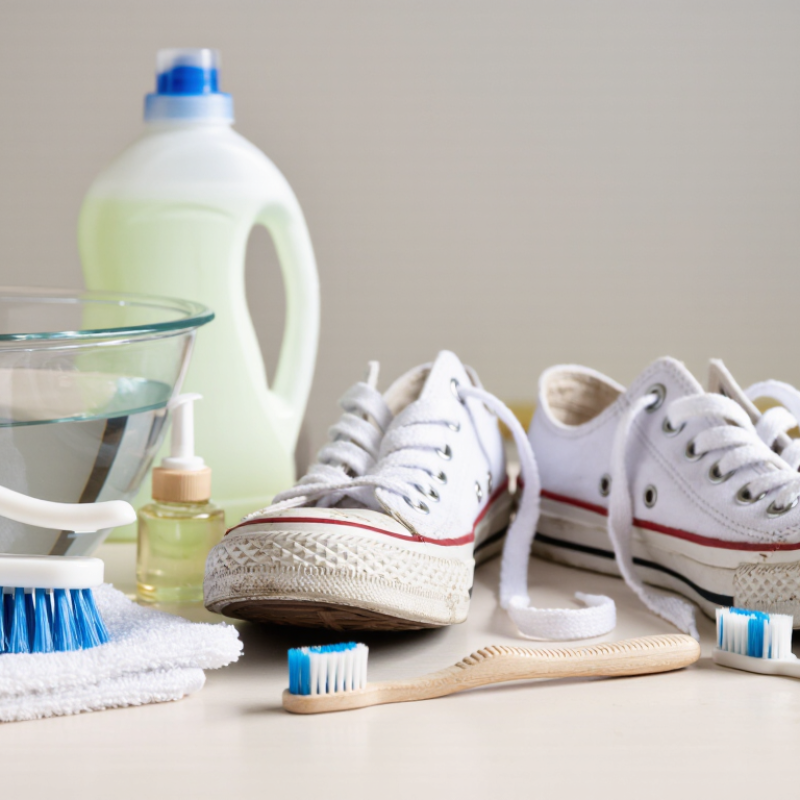
Before adding water, check the shoe’s fiber content. Canvas may contain cotton, polyester, recycled fibers, or a blend. Rubber edges and protective coatings can react differently. Read the care label, then inspect the tongue or inner seam for loose dye.
Colorfastness matters, even on white shoes. Dampen a white cotton cloth and press it against each material for ten seconds. Any transferred color signals risk.
AATCC TM61 evaluates colorfastness during accelerated laundering. Its five-cycle benchmark can help predict repeated washing exposure, but it is not a perfect substitute for your shoe’s actual construction.
Test a hidden area first. I would not skip this step, even when the fabric looks plain.
Tips:
Remove laces and dry-brush dust outdoors.
Mix lukewarm water with a small amount of mild detergent.
Work with a soft brush, using short strokes instead of soaking the canvas.
Wipe away residue with a clean, damp cloth.
Stuff the shoes with white paper towels, reshape them, and air-dry away from direct heat.
Never use colored paper, strong bleach, or a hot dryer.
They can leave stains, weaken fibers, or yellow rubber.
If the test patch changes texture or shade, stop and choose professional cleaning. That extra caution may feel excessive, but uneven whitening is difficult to repair.
White canvas shoes need gentle chemistry, not aggressive scrubbing. The 2024 World Footwear Yearbook recorded approximately 22.4 billion pairs produced worldwide in 2023. That scale makes careful home maintenance more responsible than frequent replacement.
Prepare a pH-neutral detergent, a soft-bristled brush, and two absorbent towels. A neutral solution usually sits near pH 6–8, reducing the risk of weakening cotton fibers or damaging colored stitching. Test the mixture on an inside seam.
Small test first.
Remove loose dust with a dry brush. Mix a small amount of detergent with lukewarm water, then dampen the brush rather than soaking it. Work in short circles across the canvas, especially around the toe and eyelets. Keep the sole edge separate. A 2023 household cleaning survey by the American Cleaning Institute reported that most consumers prioritize removing visible dirt, but appearance alone cannot show fiber damage. Rinse the brush often, and blot dirty foam with an absorbent towel. Do not twist the shoe. Press gently.
Stuff each shoe with a clean towel to preserve its shape. Replace the towel when it feels saturated. Air-dry them away from heaters and direct, harsh sunlight. I once over-wet a canvas toe, and the drying mark remained faintly visible. That mistake matters. Use less water than expected, and repeat the process slowly when necessary.
Dry brushing prevents wet dirt from spreading deeper into canvas fibers. Remove the laces and tap the soles outdoors. Use a clean, soft-bristled brush. Work from the heel toward the toe with gentle strokes. Do not scrub aggressively. That mistake can roughen the weave and create gray patches.
ISO 6330:2021 describes controlled domestic washing, drying, and specimen preparation procedures. It does not certify every shoe-cleaning method. Still, its principles support careful water control and repeatable testing. Mix a small amount of mild detergent with cool water. Apply it to a hidden area near the tongue. Wait until the fabric dries completely. Check for yellowing, dye transfer, or stiffness. The result may look acceptable while damp, so patience matters.
Spot-clean the visible marks with a white cloth, using short presses instead of circular rubbing. Keep the inside of the shoe lightly dry. Stuff each shoe with plain paper to preserve its shape, then air-dry away from direct heat. High heat may shrink canvas or weaken adhesives.
WRAP’s Valuing Our Clothes report estimates that extending textile life by nine months can reduce carbon, water, and waste footprints by 20–30%. Shoes are not identical to garments, but the repair-and-care principle remains useful. I sometimes over-clean small marks. That wastes water and can damage the surface. Clean only what needs attention.
White canvas shoes can look clean again without aggressive chemicals. Remove the laces and brush away dry dust outdoors. Mix lukewarm water with a small amount of mild detergent. Keep the water close to 30°C. Hotter water may loosen adhesives or encourage yellowing.
Hand-wash the canvas gently with a soft brush, especially around the toe box and stitching. ISO 6330:2021 provides controlled domestic washing procedures for textile testing, so its temperature guidance offers a useful care benchmark. It does not guarantee identical results for every shoe. Rinse thoroughly until the water runs clear. Energy Saving Trust reports that washing at 30°C can use about 40% less energy than washing at 40°C, supporting a cooler approach. Do not wring the shoes. Press them with a clean towel, then air-dry them away from direct sunlight. My own results are sometimes uneven, especially where rubber meets fabric.
Tips: Test a hidden area first. Use a white cloth. Stuff the shoes with plain paper to hold their shape. Avoid bleach unless the care label specifically permits it. A faint mark may need a second gentle wash, not harder scrubbing. Drying can take 24 hours or longer in humid rooms.
| Step | Cleaning Stage | Recommended Conditions | Method and Details | Expected Time |
|---|---|---|---|---|
| 1 | Check the Care Label | Confirm canvas construction and washing instructions | Remove insoles and laces if possible. Do not soak shoes with leather, suede, untreated wood, or delicate decorative components. | 2–3 min |
| 2 | Remove Dry Dirt | Shoes completely dry before brushing | Use a soft-bristled brush or dry cloth to remove loose soil from the canvas, stitching, and rubber sole. Work from the upper area toward the sole. | 5–8 min |
| 3 | Prepare the Cleaning Solution | Water temperature: 30°C; mild liquid detergent | Mix approximately 1 litre of lukewarm water with 5–10 ml of mild detergent. Avoid chlorine bleach, strong solvents, and excessive detergent, which may yellow or weaken fibers. | 3–5 min |
| 4 | Spot-Test the Fabric | Use an inconspicuous area | Apply a small amount of diluted solution to an inside seam. Wait several minutes and check for color change, staining, or fiber damage before cleaning the whole shoe. | 5 min |
| 5 | Hand-Wash the Canvas | Gentle hand washing at 30°C | Dip a soft brush or microfiber cloth into the solution and clean in small sections. Use light circular strokes without aggressively scrubbing or fully immersing the shoe. | 10–15 min |
| 6 | Clean the Rubber Sole | Separate tool or cloth recommended | Use a damp cloth or soft brush for the rubber edge and outsole. Keep dirty sole water away from the clean canvas upper. | 5–8 min |
| 7 | Rinse Thoroughly | Cool to lukewarm clean water; no visible suds | Wipe repeatedly with clean damp cloths until detergent residue is removed. Residual detergent can attract dirt and leave visible marks after drying. | 5–10 min |
| 8 | Remove Excess Water | No twisting or wringing | Press the shoes gently with a clean white towel. Avoid colored towels because dyes may transfer onto wet white canvas. | 2–3 min |
| 9 | Air-Dry Correctly | Room temperature; shade; good airflow | Shape the shoes with white paper or a clean towel and dry them away from radiators, tumble dryers, and direct intense sunlight, which can cause shrinkage, distortion, or yellowing. | 24–48 hr |
| 10 | Reassemble and Inspect | Shoes fully dry before wearing | Replace dry insoles and laces. Brush the canvas lightly to restore its texture and check seams, sole bonding, and any remaining stains. | 3–5 min |
White canvas shoes need gentle cleaning, not aggressive scrubbing. Remove the laces and brush away dry dust with a soft toothbrush. Mix warm water with a small amount of mild detergent. Test the solution on a hidden area first. My usual method is to dab stains, rather than soak the entire shoe. Too much water can loosen adhesives and leave uneven marks.
Rinse the cloth often while cleaning. Soap residue may attract dirt after drying. Press the shoes with a clean towel to remove moisture. Then air-dry them away from direct heat, radiators, hairdryers, and strong sunlight. Heat can shrink canvas, distort the shape, or weaken the sole. Stuff the shoes with plain paper to help them keep their form. Avoid colored paper because its ink may transfer. Allow several hours, or overnight, for complete drying.
Inspect them only after they are fully dry. Check the toe area, stitching, and sidewalls under bright natural light. A faint mark may disappear as the fabric dries. Do not repeat the whole process immediately. Repeated washing can wear the canvas and fade its original finish. Treat only the remaining spot with a damp cloth. I sometimes clean too quickly and create a larger wet ring, so patience matters.
Tips: Use a white cloth. Work from the outside inward. Replace damp paper as needed. Never store shoes while they feel cool or damp.
Prepare pH-neutral detergent, lukewarm water, a soft brush, and two absorbent towels. A white cloth helps reveal dirt. Use plain paper to support the shape.
Yes. Apply diluted detergent to an inside seam or hidden tongue area. Let it dry completely. Check for yellowing, dye transfer, or stiffness. Damp fabric can hide problems.
Remove the laces and brush the shoes while dry. Tap the soles outdoors. Use gentle strokes from the heel toward the toe. Aggressive scrubbing can roughen the canvas weave.
Use lukewarm water near 30°C. Hot water may loosen adhesives or encourage yellowing. Cooler washing also uses less energy. The result may still vary between shoes.
Mix a small amount of mild detergent with water. Dampen the brush instead of soaking it. Work in short circles around the toe and stitching. Use short presses on stains with a white cloth.
Keep the sole edge separate from the canvas. Dirt can spread from rubber onto wet fabric. Rinse the brush often. Blot dirty foam with a towel.
Stuff each shoe with plain paper or a clean towel. Replace the material when it becomes saturated. Do not twist or wring the shoes. Press gently.
Air-dry them away from heaters and harsh direct sunlight. Drying may take 24 hours or longer in humid rooms. High heat can shrink canvas or weaken adhesives. I once used too much water, and a faint drying mark remained. That mistake changed my method.
Learning how to clean white canvas shoes at home starts with checking the shoe’s fiber content and testing whether the color is stable. Use a hidden area to test a gentle cleaner, following a controlled wash approach similar to AATCC TM61 and ISO 6330 procedures. Prepare a pH-neutral detergent, a soft brush, and absorbent towels. First, remove loose dirt with a dry brush, then spot-test the cleaner and wait briefly to check for discoloration or fabric damage.
When the shoes are ready, hand-wash the white canvas gently in water around 30°C, paying extra attention to stained areas without scrubbing too aggressively. Rinse thoroughly until no detergent remains, then press away excess moisture with clean towels. Allow the shoes to air-dry in a well-ventilated place away from direct heat and strong sunlight. Once dry, inspect the results and repeat the process only if necessary to protect the canvas fibers.
