Memory foam insoles absorb sweat, skin oils, and everyday dust. Their soft structure also holds moisture longer than many people expect. A careless wash can flatten the foam, weaken the adhesive, or leave a sour smell behind. That is why learning how to clean memory foam insoles without ruining them requires restraint, not aggressive scrubbing.
Dr. Miguel Cunha, DPM, a practicing podiatrist and founder of Gotham Footcare, advises, “Avoid soaking footwear whenever possible, because trapped moisture can encourage odor and material breakdown.” His warning applies especially to memory foam. These insoles need gentle handling, controlled moisture, and enough drying time. No shortcuts.
This guide explores five practical cleaning methods. They include surface brushing, mild soap wiping, baking soda deodorizing, careful spot treatment, and low-heat air drying. Each method uses simple household materials. A soft toothbrush can lift grit from the grooves. A barely damp cloth can remove sweat marks without flooding the foam. A paper towel helps draw moisture from the surface.
The honest limitation is that some stains may never disappear completely. That is not always a cleaning failure. Old sweat can penetrate deeply. Strong fragrance sprays may hide odors temporarily, but they can irritate sensitive skin. I would rather accept a faint mark than damage the cushioning. Test any cleaner on a hidden edge first. Small caution matters here. Clean slowly, inspect the foam, and stop when the material begins changing texture.
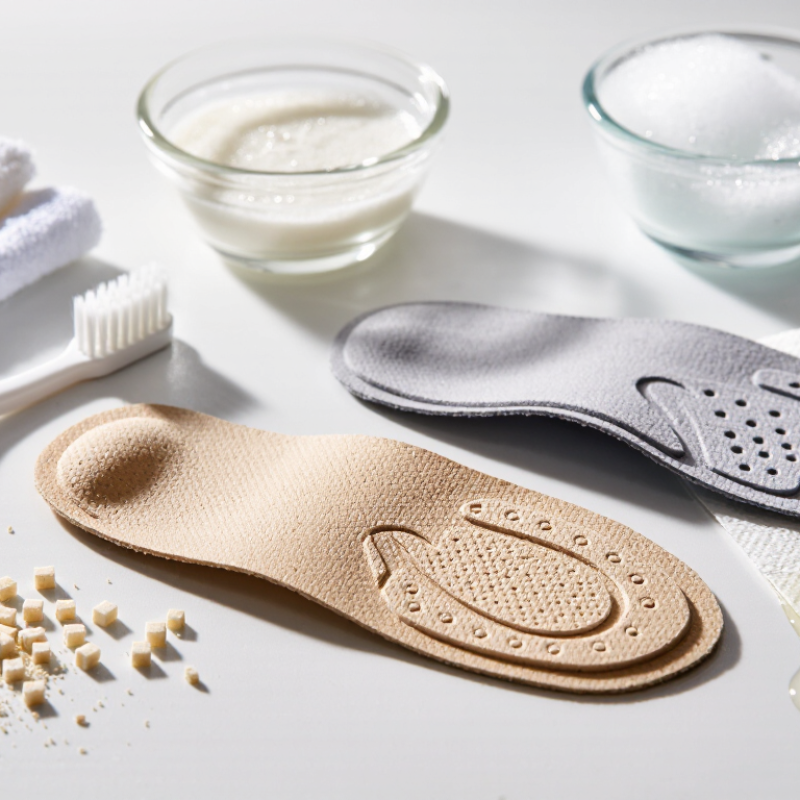
Before cleaning memory foam insoles, remove them from the shoes and inspect the edges. Check for peeling fabric, deep cracks, or exposed foam. Damaged foam absorbs water unevenly and may lose support.
I once rushed this step, and the insole dried with a permanent curl. That mistake was avoidable.
Read the shoe-care instructions if available. ISO 3758:2023 explains how care symbols communicate washing and drying limits, although memory foam often needs gentler treatment than fabric. ASTM D3574 evaluates flexible foam through tests such as compression set and airflow.
These tests matter because heat, pressure, and trapped moisture can change foam recovery. Tap the insoles together outdoors, then use a soft brush to remove grit. Avoid soaking them.
Prepare a basin with cool water and a small amount of mild, fragrance-free detergent. The CDC’s cleaning guidance states that soap and water remove dirt and many germs from surfaces; disinfection is not always necessary.
Use a clean cloth, not a stiff brush. Blot one section at a time, and keep the foam damp rather than saturated. Rinse with another barely wet cloth. Never twist or wring the insoles.
Press them between towels, reshape them by hand, and air-dry them in shade with strong airflow. Avoid radiators, hair dryers, and direct midday sun.
Drying may take 24 hours or longer. If a faint odor remains, repeat gently instead of adding stronger chemicals.
5 Best Ways to Clean Memory Foam Insoles Safely
Removing Surface Dirt Without Damaging the Foam
Memory foam insoles collect dust, skin flakes, and fine grit from daily walking. I usually remove them before cleaning, because hidden dirt can spread into the shoe. Tap each insole gently over a bin, then use a soft, dry brush to loosen particles. A clean toothbrush works well around the edges and heel grooves. Avoid stiff bristles. They may tear the foam surface.
For light marks, dampen a microfiber cloth with lukewarm water and wring it almost dry. Add one drop of mild soap, then dab the dirty area instead of scrubbing. Work in small circles. Never soak the insole, since trapped moisture may weaken the foam or create lingering odors. Wipe away soap with another barely damp cloth. For stubborn surface dirt, repeat the process slowly rather than applying more pressure. I have found that patience works better, although some stains remain visible.
Tips: Keep the water cool. Skip bleach, alcohol, and harsh cleaners. Place the insoles flat in a ventilated room, away from direct heat and sunlight. Let them dry completely before returning them to the shoes. Check the foam after cleaning. If it feels rough, warped, or unusually soft, the method was too aggressive.
Washing memory foam insoles by hand is usually safer than putting them in a machine. I remove the insoles and gently brush away loose dirt with a soft, dry cloth. Then I mix lukewarm water with a small amount of mild, fragrance-free soap. Hot water can weaken the foam and change its shape.
I dip a clean cloth into the solution and wring it out well. The cloth should feel damp, not dripping. I wipe the surface in small circles, paying attention to the heel and toe areas where sweat collects. For stubborn marks, I press the cloth against the spot for several seconds instead of scrubbing hard. Be gentle here. Memory foam can tear under rough treatment.
I once soaked an insole too long, assuming more water meant better cleaning. It stayed damp inside and developed an unpleasant smell. Now, I use a second cloth with clean water to remove soap residue, then press the insole between dry towels. I leave it flat in a shaded, well-ventilated place for at least 24 hours. Never use a radiator, hair dryer, or strong sunlight. Heat may cause shrinkage or uneven drying. Before wearing the insoles again, I check for lingering moisture, loose foam, or cracking. If the odor remains after cleaning, replacement may be more practical than repeated washing.
Hand washing with a mild cleaning solution helps reduce moisture exposure and protects the foam structure. The chart shows practical maximum contact times for each cleaning step.
Safety tip: Avoid machine washing, harsh bleach, prolonged soaking, and direct heat. Rinse gently, press out excess water with a towel, and air-dry completely before wearing.
5 Best Ways to Clean Memory Foam Insoles Safely?
Memory foam absorbs sweat, so odor often remains below the surface. Remove the insoles and brush away loose dirt with a soft, dry cloth. Let them air beside an open window, away from direct heat. Heat can warp the foam. Keep them dry.
For deodorizing, sprinkle a thin layer of baking soda across both sides. Leave it for six to twelve hours, then shake or vacuum it away gently. Baking soda helps absorb odor, but it does not remove heavy stains. A common mistake is using too much. It can settle inside the foam and leave a dusty smell.
For stronger odors, dilute white vinegar with three parts water. Lightly mist the surface, or dab it with a barely damp cloth. Do not soak memory foam. Test a hidden edge first, because vinegar may affect some surface coatings. Never mix vinegar and baking soda in a closed container. The fizz looks useful, but the mixture mostly neutralizes both ingredients. Let the insoles dry completely before wearing them. They may need a full day. If odor returns quickly, the shoes and socks also need attention. This method is not flawless, especially with old sweat trapped deep inside the foam.
Memory foam insoles need gentle cleaning and careful drying. Start by removing loose dirt with a soft brush. Mix lukewarm water with a small amount of mild soap. Use a damp cloth to wipe the surface, especially around the heel and toe areas. Avoid soaking the foam, because trapped water can encourage odors and weaken the material.
Never twist or wring the insole. Press it gently between clean towels instead. Then place it flat in a shaded, well-ventilated area. Keep it away from radiators, hair dryers, heated floors, and strong sunlight. High heat may shrink the foam or create uneven edges. I once rushed this step and used warm air. The insole dried quickly, but its heel became slightly curved. That shortcut was a mistake.
Tips: Check the care label first. Dry both sides. Turn the insoles after several hours. Allow 24 to 48 hours before wearing them again. If the foam still feels cool or heavy, it needs more time. Do not put damp insoles inside shoes, even briefly. Once dry, gently press around the edges to check their shape. A flat storage position helps prevent permanent bends. Avoid stacking heavy items on top. Fresh air works better than perfume sprays, although odor can sometimes return after cleaning.
Remove the insoles before cleaning. Tap them gently over a bin. Use a soft, dry brush around edges and heel grooves.
Yes, use a clean toothbrush with soft bristles. Avoid stiff bristles. They may tear the foam.
Mix lukewarm water with one drop of mild, fragrance-free soap. Keep the mixture gentle. Avoid bleach, alcohol, and harsh cleaners.
No. Dab the mark with a barely damp cloth. Press gently for several seconds. Repeat slowly if needed. Some stains may remain.
Avoid soaking them. Trapped water can weaken the foam and create lingering odors. The cloth should feel damp, not dripping.
Wipe the surface with another clean, barely damp cloth. Then press the insole between dry towels. Do not twist or wring it.
Lay them flat in a shaded, well-ventilated room. Allow at least 24 hours. Keep them away from radiators, hair dryers, direct sunlight, and strong heat.
Check for moisture, cracking, rough areas, warping, or unusual softness. If the odor remains, replacement may be more practical. I learned this after soaking one too long.
Cleaning memory foam insoles safely starts with preparation. Remove them from the shoes, check the care label, and gently shake or brush away loose dirt. To learn how to clean memory foam insoles without ruining them, avoid harsh scrubbing, hot water, bleach, and machine washing, since these can damage the foam’s structure. Instead, use a soft brush or cloth to remove surface debris, then hand-wash the insoles with cool or lukewarm water and a small amount of mild soap. Press and wipe gently rather than twisting or soaking them for too long.
For odors, sprinkle baking soda over the dry insoles and leave it for several hours before brushing it off. A lightly diluted vinegar solution may also help neutralize smells, but it should be used sparingly and rinsed carefully. After cleaning, press the insoles between clean towels to remove excess moisture. Let them air-dry completely in a cool, ventilated area away from direct heat or sunlight. Proper drying helps preserve their shape, softness, and comfort.
